
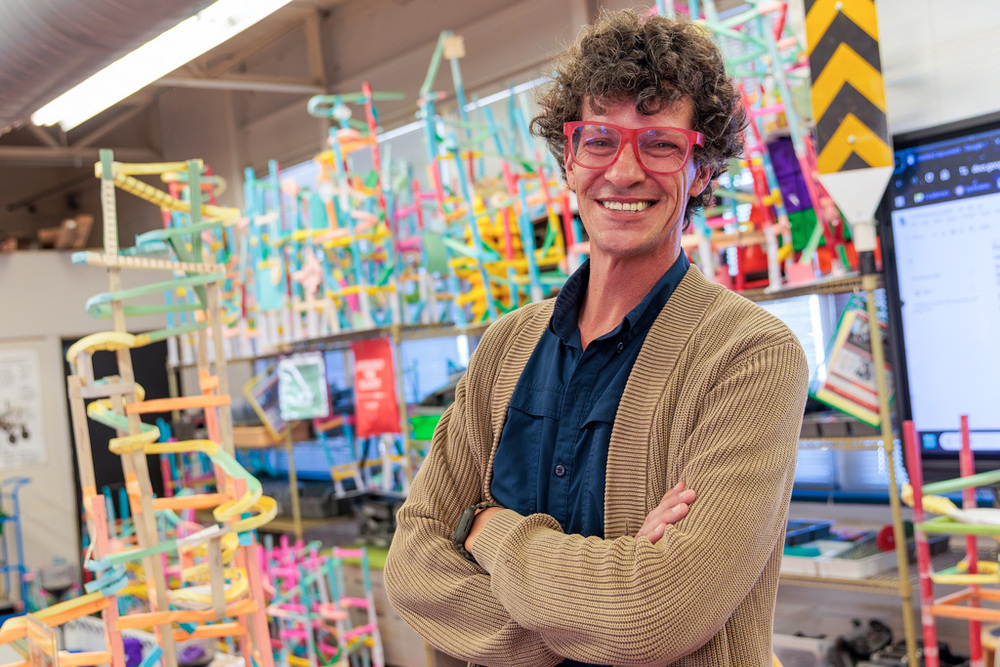
One question told Spring Woods Middle School (SWM) CTE teacher Joshua Hopper that his student was beginning to see things differently.
During an AutoCAD and 3D printing unit, the student approached him with a problem he had noticed in his daily life. He had an idea for a solution. Could he use the classroom’s 3D printers to build it?
By Monday, the student returned eager to share his design work. Together, they started the printers. The next day, he brought videos showing his finished parts in action.
For Hopper, the breakthrough went beyond a successful project. The student had recognized a problem, imagined an improvement and discovered he had the skills to make it happen.
“He had started looking out into the world and finding things he could improve,” Hopper said. “And for the first time he had the knowledge, skills, and an avenue to make it happen.”
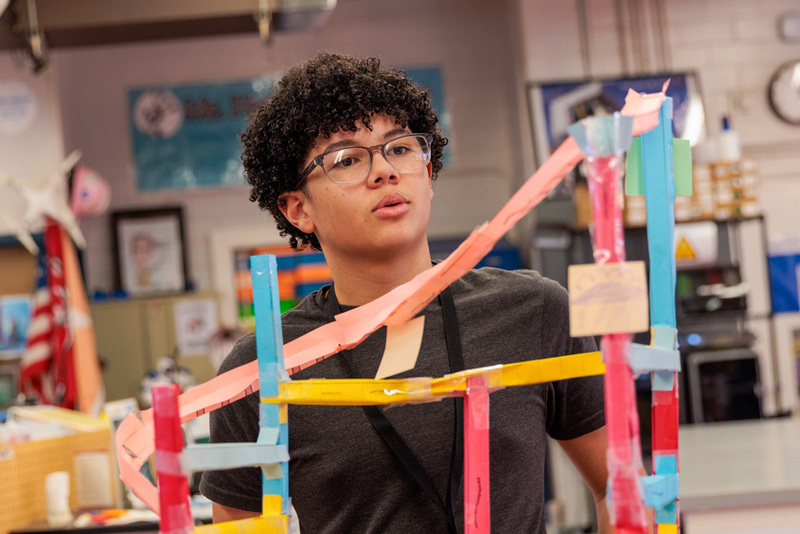
As Spring Branch ISD (SBISD) celebrates T-2-4 Week, experiences in Hopper’s classroom show how Career and Technical Education (CTE) teachers help students connect learning to their futures well before high school.
From middle school employability labs to 26 CTE Programs of Study districtwide, including 14 specialized programs at the Guthrie Center, SBISD helps students explore their interests and prepare for T-2-4 success.
Across campuses, teachers like Hopper help students take those first steps toward technical training, two-year degrees, four-year degrees and the opportunities beyond.
From science to engineering possibilities
Now in his fifth year in SBISD, Hopper began his teaching career in science, spending eight years in the subject before finding a new direction through after-school robotics.
Coaching robotics teams and joining a group developing robotics and engineering curriculum in another district helped him discover how much he enjoyed guiding students through the engineering process.
Today, that process is central to his teaching. Students brainstorm, design, build and test. They work through challenges and see an idea become something they can hold in their hands.
“I love the project-based style of my course,” Hopper said. “It mirrors the real-world job experience.”
His foundational course introduces skills students can build on through multiple pathways, including certification programs and four-year degrees.
By placing students in real-world scenarios and giving them opportunities to work with their hands, he helps them explore both what interests them and what they can accomplish.
A foundation for T-2-4 success
That connection between learning and possibility is at the heart of SBISD’s T-2-4 vision.
Hopper wants families to recognize the doors CTE pathways can open, including industry connections and experience that can give students an early start.
For students beginning to explore their interests in classrooms like Hopper’s, those opportunities provide a glimpse of what comes next.
Foundational learning on their home campuses can lead to advanced coursework, industry credentials and hands-on career preparation at the Guthrie Center.
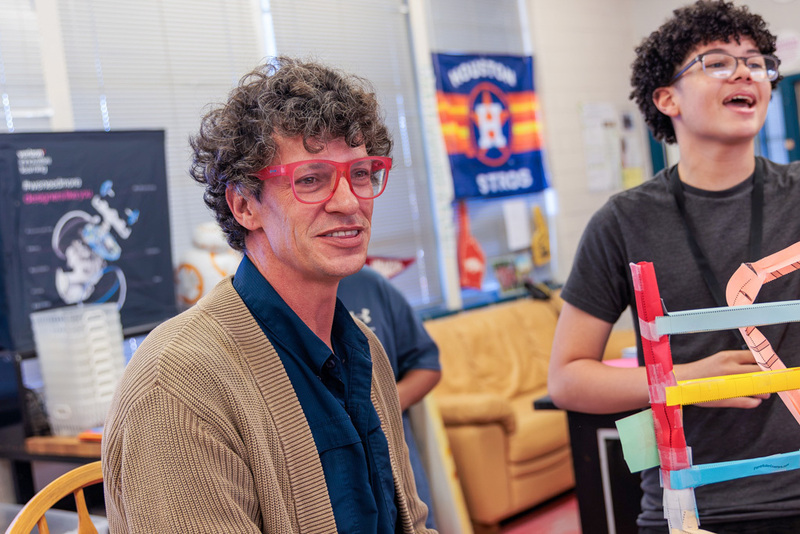
Teachers across SBISD help students make those connections, turning curiosity into practical skills and a plan for future success.
For Hopper, the work is personal. His three children have attended SBISD schools, and teaching here allows him to contribute to the community his family calls home.
“I love making a difference in my own neighborhood and working with students that will go out and change the world,” he said.
Sometimes, that work begins with a student asking a question. With a teacher’s guidance, the right tools and room to explore, it can become the moment a student starts to see a future they can build.